Thursday, December 30, 2010
Quadrantids Meteor Shower - January 3-4, 2011
Sunday, December 26, 2010
Shimmering Early Morning Sky
Tuesday, December 14, 2010
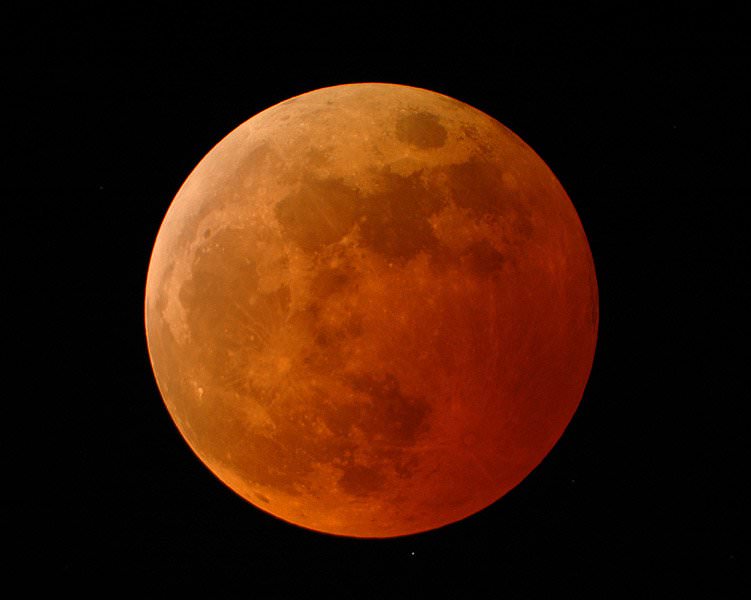
Total Lunar Eclipse of December 20, 2010
Wednesday, December 8, 2010
Geminid Meteor Shower 2010
Meteor showers generally get better late into the night because the Earth is rotated in the direction of its orbit around the Sun and consequently we encounter a higher number of meteors, on average. This is certainly true for the Geminids, and in dark conditions after midnight you might see 1 or even 2 meteors a minute. Being winter, you have to really prepare for this by dressing extremely well for your local conditions. I plan to get up early and look for Geminids in the early morning hours of Tuesday 14th, since the Sun does not impact the viewing until after 6:00 am.
This year is particularly favorable for the Geminids because the Moon is at First Quarter and will not be a factor after midnight. Stay warm and enjoy the show!
Friday, December 3, 2010
KFOG Podcast - December 3, 2010
Sunday, November 28, 2010
Brilliant Venus and Old Moon in the Dawn Sky
Monday, November 22, 2010
Review of iPhone Astronomy Apps: ISS Visibility and Iridium Flares
Monday, November 15, 2010
Leonid Meteor Shower 2010
Tuesday, October 26, 2010
KFOG Podcast - October 26, 2010
Sunday, October 24, 2010
Waning Moon, Morning Darkness
Tuesday, October 12, 2010
An Elusive Comet in Urban Skies: Hunting for Hartley 2
Wednesday, September 22, 2010
Autumnal Equinox and the rate of change of the length of the day
Monday, September 20, 2010
Jupiter's closest approach to Earth
Every year as the Earth moves around the Sun, at some point in time it is at its closest approach to Jupiter. This moment is called "opposition" and is when the Earth, Sun and Jupiter are all in a perfect line. Each year the distance between the Earth and Jupiter might be a bit more or less depending upon the circumstances of each planet's orbit. This year, the distance is smaller than usual (closest since 1963 and until 2022), but that difference is relatively small from year to year. More important is that the planet is at its brightest for the year, and remains high in the sky for optimum viewing for the entire night.
Sky and Telescope Magazine has an excellent article about this close encounter if you want more details.
Tuesday, September 14, 2010
Blue Star, Red Star, Yellow Star
Friday, September 10, 2010
KFOG Podcast - September 10, 2010
Wednesday, September 8, 2010
Get Involved: Astronomy Lectures, Star Parties and more

Monday, August 23, 2010
Perspective of the Solar System
Wednesday, August 11, 2010
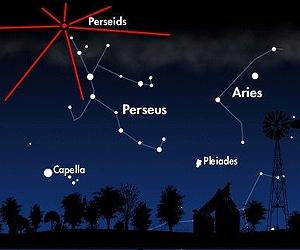
Perseid Meteor Shower 2010
Monday, August 2, 2010
Trio of Planets
Friday, July 16, 2010
KFOG Podcast - July 16, 2010
I was in San Francisco this morning recording another podcast for the KFOG Morning Show Podcast Series. Morning Show Producer Irish Greg and I had a very spirited and lively conversation about planets, the Solar System, Star Parties, Iridium Flares, Dark Energy and Dark Matter. In a fast-paced 9-minute conversation we discuss everything from the phase of the Moon to the origin of the Universe. Get inspired to see the sky tonight: Click here to listen.
Sunday, July 11, 2010
A Must See: Four Planets and the Moon
Friday, July 9, 2010
Total Solar Eclipse 2010
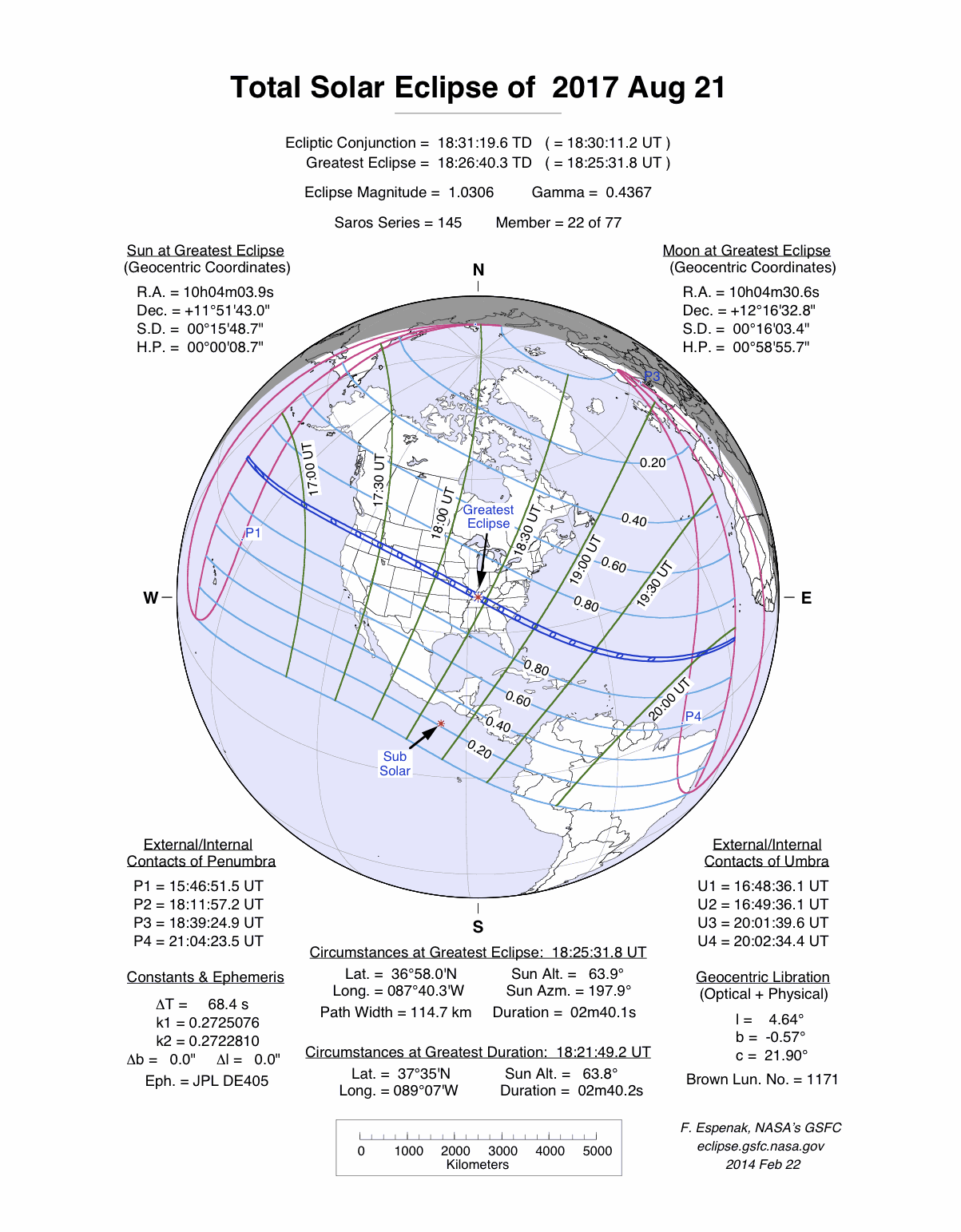
For those in the US who don't want to travel far, your next chance to experience at Total Solar Eclipse will be 2017.
Monday, July 5, 2010
Star-and-Planet Drama
Saturday, June 19, 2010
The Path That Leads to the Earth's Shadow
Friday, June 11, 2010
Heavenly Line-Up
Over the past months the evening sky has been graced by a number of bright stars and planetary configurations. As summer approaches and these stars and planets move westward toward the sunset day after day, heavenly line-ups are emerging that are beautiful to see and are dynamic in nature, changing dramatically from one day to the next.
Friday, June 4, 2010
KFOG Podcast - June 4, 2010
Saturday, May 29, 2010
High in the sky: The Big Dipper
The Big Dipper is not a constellation, by strict definition, because it is only the brightest 7 stars of the larger constellation Ursa Major. A named combination of stars within a constellation such as the Big Dipper is known as an "asterism." Because of its distinctive shape, the Big Dipper is a very well known asterism, one of several celestial groupings that lives up to its name (I put Leo, Scorpius, Cygnus and a few other constellations in this special class).
The Big Dipper points to the North Star (Polaris) if you follow the two stars at the side of the bowl of the dipper. This Wikipedia article illustrates this nicely. The line along the pointers from the Big Dipper to Polaris is helpful because this line is similar to an hour hand on a 24-hour clock. Every 24 hours the Big Dipper makes one counter-clockwise rotation around Polaris. From latitude 38 degrees north (approximately the latitude here in San Francisco) the Big Dipper is high in the sky when it is above Polaris (as it is now at sunset) and low in the sky when it is rotated half way around Polaris just above the horizon (as it will be in late Fall evenings).
Saturday, May 8, 2010
Planets and Bright Stars along the Ecliptic
Face South about 30-45 minutes after sunset and you will be looking toward the ecliptic. It stretches from the point of sunset to your right (West) where bright Venus gives you one reference point, then stretches up and toward the south to Castor and Pollux, the two twin stars of the zodiac constellation Gemini. Just to the upper left of the pair is bright orange Mars, and continuing left you encounter blue-white Regulus, the brightest star in the zodiac constellation Leo. Now the line of the ecliptic moves down toward the East, that is, down and to the left as you face South. Lower left of Leo is the planet Saturn, a bright, milky-white dot of light. And continuing to the lower left of Saturn is the bright star Spica, in the zodiac constellation Virgo.
Enjoy the tour, and if you have a star chart, put it to work so you can use these bright points of light to help you learn a few constellations. Even in the big city, all of these are visible.
The image on this page was copied from Nick Strobel's Astronomy Notes. Go to his site at www.astronomynotes.com for the updated and corrected version.
Sunday, April 25, 2010
A Beacon in the Twilight
Wednesday, April 14, 2010
Friday, April 9, 2010
Mars and the Beehive
Mars, like all other planets, moves eastward from our point of view most of the time but when Earth have just the right alignment (as we did with Mars over the last few months) a planet may appear to travel westward, and we call this motion "retrograde." Click on the image to see how Mars was in retrograde from December through March.
Now that Mars is moving eastward again, it is traversing a part of the
Sunday, March 28, 2010
Seeing Mercury in the evening sky
Saturday, March 27, 2010
Full Moon Fever
Tuesday, March 16, 2010
Winter Triangle
The first and brightest star is Sirius, the brightest star in the night sky. Sirius is close to the Solar Systems (8 light years) and has a slight blue coloration. Sirius is in the constellation Canis Major, the big dog that accompanies Orion. To the upper right is Betelgeuse, a red supergiant star in Orion that is a distinctive orange color. Betelgeuse is so big that if it was our Sun, it would envelop Mercury, Venus, Earth and Mars! And the third star of the triangle is Procyon, in the constellation Canis Minor, the small dog that accompanies Orion. Procyon is actually a double-star system with a faint partner star.
Inside the Winter Triangle you can find numerous clusters of stars. I spent some time looking here a few nights ago and was able to see quite a few of these clusters, even in San Francisco. My backyard has a dark western horizon so by looking through binoculars later in the evening I was able to see quite a bit in and around the asterism. Try this for yourself sometime soon.
Friday, March 12, 2010
Get Involved: Chart the Skies, Hear a Lecture, Attend a Star Party
Globe at Night: I am a big fan of this annual project, one that combines astronomy with awareness of light pollution and is also a global participation project. Go outside tonight and look up at Orion, then report what you see at the Globe at Night website. It only will take a few minutes but it will change how you see the sky at night. I am certain about this one.
Lecture: Each month the San Francisco Amateur Astronomers hold their meeting at the Randall Museum in San Francisco. The meetings are open to the public and fe
California Academy of Sciences Nightlife: Every Thursday the Cal Academy stays open late for a fun, festive evening with music, drinks and science. When the skies are clear you can stargaze and look up clos
e at the universe through telescopes on the Living Roof. And this week, on Thursday March 18, I'll again be a guest at NightLife giving a talk about the Night Sky and laser-guided star tours on the roof. I hope to see you there. (note: must be at least 21 years of age)Star Parties: The San Francisco Amateur Astronomers host monthly star parties at Lands End in San Francisco, weather permitting. The next on is on Sunday March 21st. And on April 17th the Mount Tamalpais lecture series and star parties return. These are an excellent combination with lectures at the Mountain Theater and star gazing in a dark setting atop Mt. Tam. You won't be disappointed -- even when it is foggy in San Francisco it is generally clear and dark on Mt. Tam.
Sunday, March 7, 2010
The Moon and the Ecliptic
Saturday, February 27, 2010
Moon Traveling Along the Ecliptic
Friday, February 26, 2010
The Urban Astronomer speaks!
Tuesday, February 23, 2010
Winter Sky Show: Gemini, Mars and the Moon
Mars is the bright orange beacon of light that is gracing the night sky, the brightest object high in the sky for the next many weeks. As Mars orbits the Sun, we observe it moving against the backdrop of the Zodiac constellations, changing its position gradually from month to month as it travels eastward from our Earthbound perspective (this is called prograde motion, in contract to retrograde motion – more on that in a future post). It is about to start moving away from the twins of Gemini through Cancer toward Leo the Lion where it will arrive in May.
The Moon
Friday, February 12, 2010
KFOG Podcast - Feb 12, 2010
I've been a frequent guest on KFOG 104.5-FM in San Francisco for the last two years. I am going to start a new series of programs with KFOG's Irish Greg that they will include in their Morning Show "Web Show" page. I am looking forward to regular recordings with KFOG, keeping the Fogheads up to date with the goings-on in the sky. Here's the first of our recordings with conversation about what to see in the Winter sky, a few words about the San Francisco Sidewalk Astronomers, and some tips for telescope shopping.
Tuesday, February 9, 2010
Old Moon, Young Moon
This week we've had a few opportunities to see the very
Monday, February 8, 2010
Get Involved: Cal Academy, Star Parties, meet John Dobson
February is a busy month here in San Francisco for those who are ready to take a step forward and get involved in a local astronomy event or two. Here's the lineup.On February 11, the San Francisco Amateur Astronomers (SFAA) team up with the California Academy of Sciences for a new series of astronomy talks and star tours on the Living Roof of the Cal Academy. I'll be giving the talk this Thursday during the NightLife event at 7:15 pm. More information and tickets on the NightLife webpage.
On February 17, the SFAA holds its monthly meeting and lecture at the Randall Museum in San Francisco. And on February 20th they have their City Star Party and Telescope Workshop. You can dust off your old telescope and bring it out for a quick lesson on using your telescope (before the sun sets), and then enjoy stargazing at the City Star Party. This is at Lands End in San Francisco.
On February 25
I hope to see you at one of these events.
Wednesday, February 3, 2010
Annular Solar Eclipse of 2010
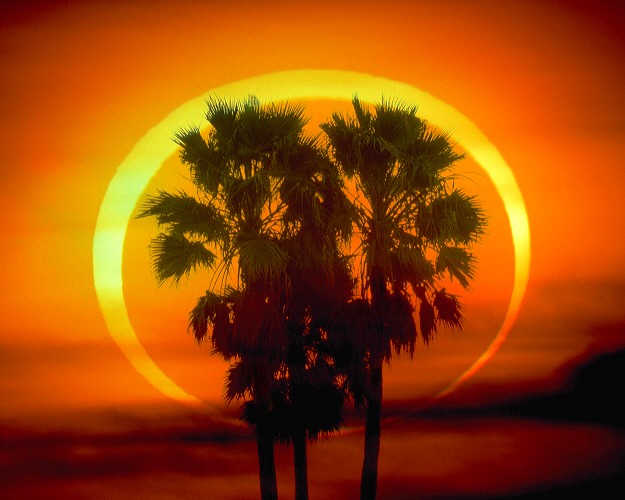
Last month there was one such event, a type of solar eclipse called an Annular Eclipse. In this configuration, the Moon's disk appears to block out most the Sun but does not completely block it out. What makes the Annular Eclipse very special, however, is that the disk of the Moon is fully encircled by the Sun. The eclipse in January was not visible here in San Francisco but was seen in the eastern hemisphere. A fellow astronomy blogger and resident of Sri Lanka, Desh, put together an eclipse page that has video footage of the event and lots of great photographs. He organized a major eclipse viewing event for Sri Lanka.
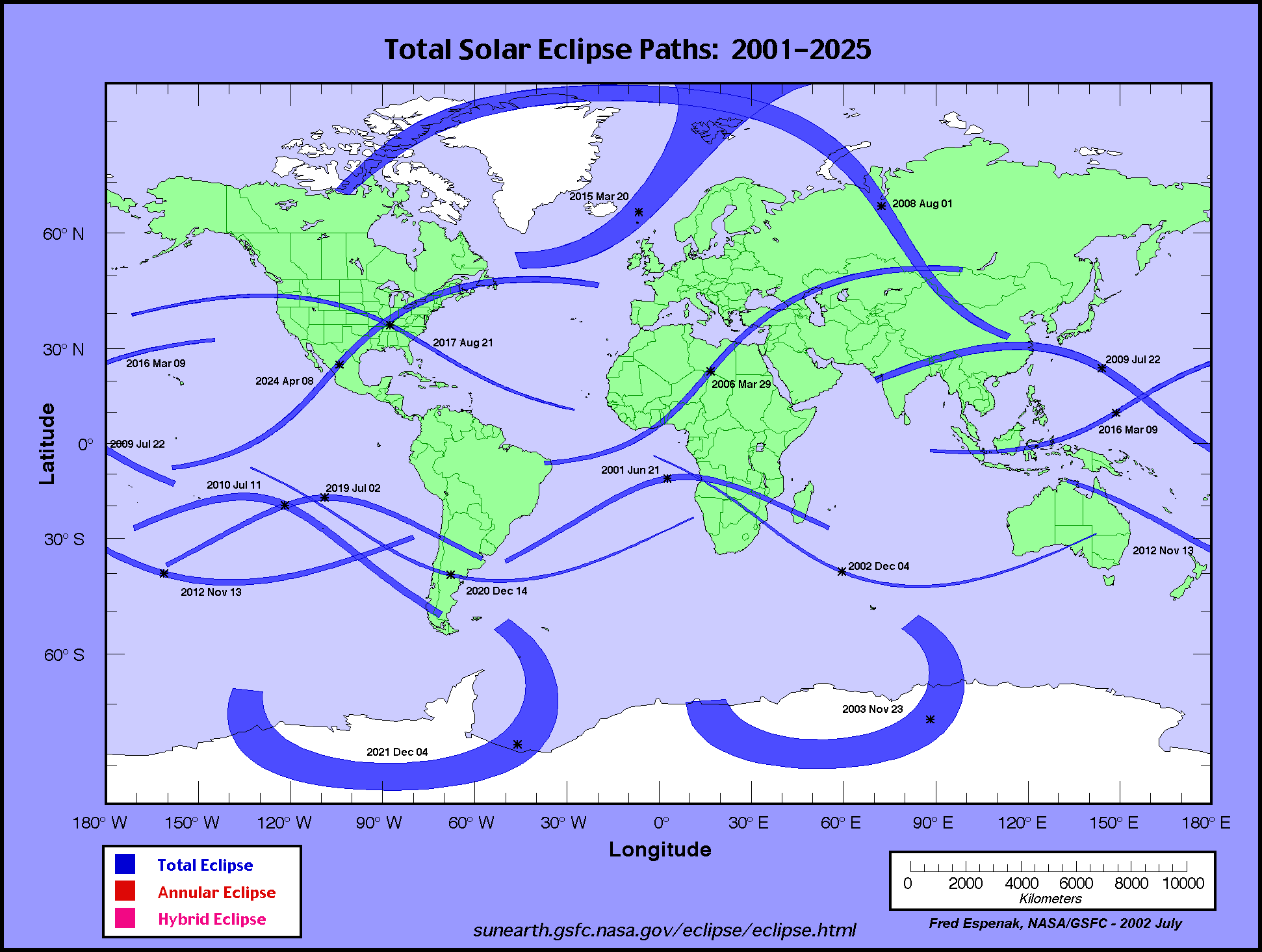
Throughout 2010 there are more eclipses. The biggest event of the year is the Total Solar Eclipse that happens this July 11th, but again will not be visible here in San Francisco. To see this one you will need to travel to the South Pacific. The NASA Eclipse web site is full of details on this and every eclipse and for those of you who want to travel to see a Total Solar Eclipse someday, consult the NASA Total Solar Eclipse Paths map on their website. I think of it as a long-range travel planner!
For those of us in the Bay Area (and the entire Western Hemisphere), mark your calendars for December 21st when we get a beautiful Total Lunar Eclipse on the solstice to welcome in the winter.
Note: for a nice audio description of an eclipse, listen to my recent interview on KALW (just after the stargazing part of the interview).