Wednesday, January 29, 2014

New Moon and Mercury at Dusk


Mercury and a Young Moon
Elusive Mercury springs into view as January comes to an end, emerging in the glare of dusk this week. The very thin crescent Moon emerges at the same time, and a careful observer with a clear western horizon (and a good pair of binoculars) will have a lovely sight to enjoy. I enjoy seeing the stars and Moon emerge from the glare of the sunset, and when I have a clear view of the sky to the west after sunset I also look backwards to experience the Belt of Venus as it rises on the opposite horizon and envelops the eastern horizon.

Friday, January 24, 2014

Old Moon at Dawn

Old Moon at Dawn
The early morning sky this week features an old Moon fading each day into the sunrise, passing landmarks in our sky as it fades. The Moon follows a path across the sky that parallels the planets, so there are frequent encounters between the Moon and planets, and on the 25th that features the planet Saturn, not positioned in the east before sunrise. Saturn is gradually moving from the constellation Libra into Scorpius over the next few years, but the Moon makes that same move across the sky in a few days, passing by the bright orange heart of the Scorpion, Antares, one of the biggest stars in the entire galaxy.

You will need a good eastern horizon to see the fullness of Scorpius and the Moon’s path on the 26th and 27thbut if you are up early you will have a treat seeing these bright objects shining in the morning darkness.

Thursday, January 2, 2014

Crescent Moon and Crescent Venus

Two Crescents
The evening sky features two crescents this week, that of the waxing Moon and waning Venus. The Moon's phases are quite familiar to all, but Venus goes through similar phases for similar reasons, and we can observe it from more than just the 'full' phase as we do with outer planets such as Jupiter and Saturn. Venus waxes and wanes like the Moon. This week as it comes close to inferior conjunction, it will resemble the Moon when viewed through a telescope or binoculars. You'll need a clear and low western horizon to see this view shortly after sunset.

More details on EarthSky: http://earthsky.org/space/as-2014-begins-venus-a-thin-crescent-in-bright-twilighthttp://earthsky.org/space/as-2014-begins-venus-a-thin-crescent-in-bright-twilight

Image courtesy of Sky & Telescope.

Tuesday, December 31, 2013

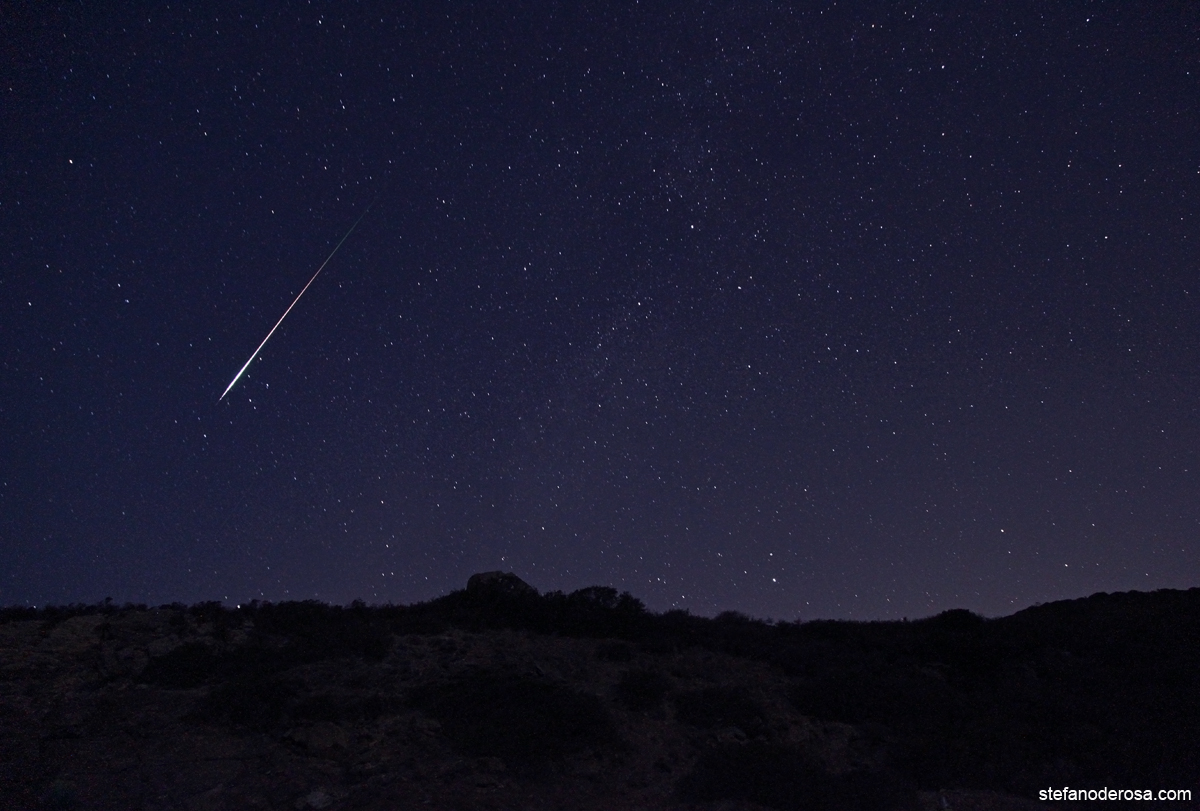
Quadrantid Meteor Shower 2014

Quadrantid Meteor
The annual Quadrantid meteor shower is underway, bringing its lovely blips of light streaking across the sky. This shower takes place over several days but has a strong peak the morning of January 3rd. As is the case with all meteor showers, you want to be in a dark location (or if you live in a city, in an unlit location such as a backyard or park or beach), and you need to give yourself 5-10 minutes for your eyes to adapt. You'll want to dress extra-warm and use a sleeping bag so you can relax on your back and enjoy the view skyward. There is no particular direction you need to look; the best view of any meteor shower is directly overhead. Universe Today and EarthSky have helpful articles for further information.

The Quadrantids are the first of many meteor showers in 2014. I hope you can see many of them.

Image linked from stefanoderosa.com photography website.

Saturday, December 28, 2013

Super New Moon and Perigean Spring Tides

Charlie at Ocean Beach
I live on the west side of San Francisco near Ocean Beach and enjoy seeing the impact of the Sun and Moon firsthand. I watch the seasonal changes to the high and low tides at the beach and note the relative impact of the changing phases of the Moon and the subtle influence of the Sun's near and far approaches to the Earth. These changes are compounded on January 1st and the impact on tides will be dramatic.

On January 1st, we'll experience the first of three "SuperMoons" for 2014, but you won't be able to see the first one as it will be a Super New Moon. Previously we had some beautiful Super Full Moons, glorious to watch as they rise and dominate the night sky. But a Super New Moon is so close to the Sun that it's not visible at all. However, it's influence is felt in our oceans and on full display in the tidal highs and lows. On January 1st, we see the convergence of three separate influences on the tides:

- the larger than usual Spring Tide that takes place each month at New Moon
- the influence of "Perihelion" when the Sun is nearest the Earth for the year (specifically on Jan 3)
- the influence of "Perigee" when the Moon is nearest the Earth for this lunar cycle

As these three things line up and reach peak on January 1st, we will see the highest high tides and lowest low tides of the year, also known as a Perigean Spring Tide. At Ocean Beach we will see a +7 foot high tide around 10:30 am, and a -1 foot low tide around 4:30 pm, something that dries up the shore just below the famous Cliff House landmark at the edge of San Francisco. I'll be there!

There is an interesting project called the California King Tides Initiative that seeks to document very high tides, in an effort to evaluate the impact of global warming on coastal communities. When we have Super Moons, the tides are usually higher than usual as well - a chance to experience a King Tide.

Sunday, December 15, 2013

Comet Lovejoy in the morning

Comet Lovejoy
Despite the fizzle of Comet ISON, another comet is nearing its closest approach to the Sun and is assuredly *not* going to burn up. Comet Lovejoy 2013 is not a bright comet, but it is a beautiful sight with a long tail as it nears the Sun. Lucky for this comet, it won't be a "sun grazer" like ISON, so there is no threat of imminent disintegration. You'll need binoculars or a telescope to see it in any detail, and it will be best seen toward the end of December when the moonlight will interfere less with the night sky.

This article by Astro Bob contains good information on finding Lovejoy in the morning sky, presently in the constellation Hercules.

Image credit: Gerald Rhemann.

Thursday, November 28, 2013

Comet ISON at Perihelion on Thanksgiving Day 2013

Today is the big day when ISON flies by the Sun ("perihelion"), and all eyes are on NASA's SOHO spacecraft that is watching the event first-hand.

For up-to-the-minute web resources, I recommend the following sites.

Google Hangout with NASA
SpaceWeather.com
Sky & Telescope
EarthSky.org
NASA Comet ISON Observing Campaign

As of 7:00 am pacific time, it seems that the brightness of Comet ISON dropped somewhat, as reported on Spaceweather.com and Sky & Telescope.

There is concern that the very active Sun could release a Coronal Mass Ejection (CME) as ISON is at closest approach and this would be a very substantial threat to ISON's survival.

As of 8:30 am pacific time, there is speculation that the brightness is falling rapidly indicating that the comet is considerably vaporized and might not survive perihelion.

As of 10:00 pm pacific time, it's possible that a small part of the comet remains intact, but overall it seems that the comet has been mostly decimated in the trip around the Sun.

As of November 30, it looks like Comet ISON has really disintegrated. Very sad indeed. But it was a fun to have all of the excitement and close watching of this rare event. Here's to the next big comet headed our way!